'Inheritance Games': A Review and Conversation with Writer-Director Ed Robinson
Jun 29, 2026



From betting on himself as a filmmaker to championing the future of vertical dramas, Ed Robinson has embraced unexpected opportunities throughout his career. In an exclusive interview with Vertical Drama Explorer, the "Inheritance Games" writer-director reflects on storytelling and what's next.
Ed Robinson's career has taken him from television writing in Australia to voice acting in Canada, acting in India's film and television industry, and now directing vertical dramas in Mumbai. Behind the unconventional journey is a filmmaker determined to create original stories without losing sight of the people making or watching them.
Advertisement

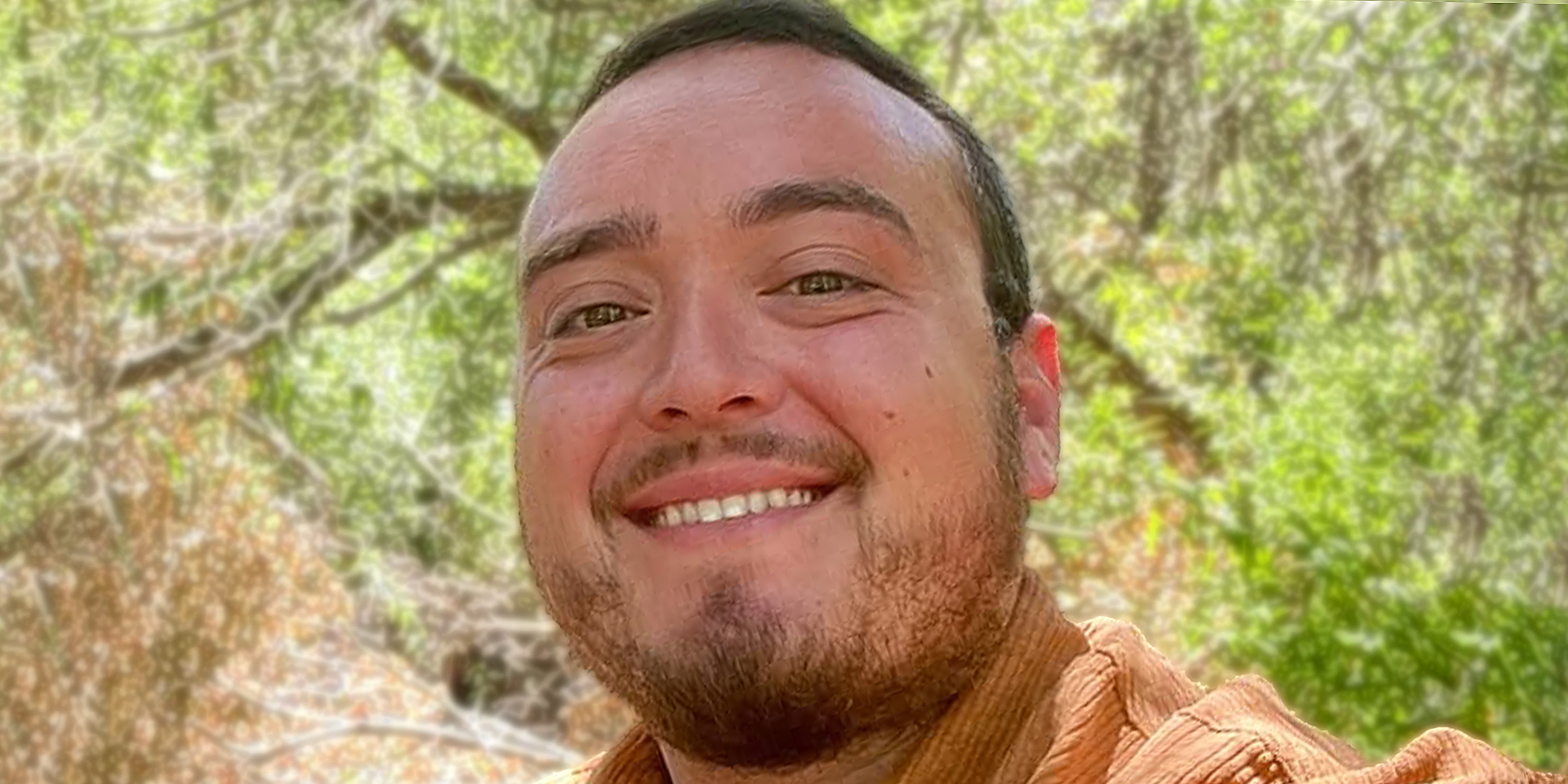
Ed Robinson on the set of one of his productions. He recently wrote and directed the vertical drama "Inheritance Games." | Source: Ed Robinson
For Robinson, the path into filmmaking has never followed a conventional route.
The Australian writer, actor, voice artist, and director began trying to break into television writing immediately after high school. Although he sold several pilots, none ultimately made it to the screen.
"It's pretty common really, so few things ever actually make it to the screen," Robinson told Vertical Drama Explorer in an exclusive interview.
In his early 20s, he relocated from Sydney to Canada with plans to pursue musical theater. Instead, he found himself taking smaller supporting roles in films and gradually building a career as a character actor.
"I don't have a leading man look so the spine of my career has always been character roles," he said.
Around the same time, voice-over work became an increasingly important part of his professional life. Robinson estimates that he has accumulated between 600 and 700 voice-over credits, primarily through advertisements, animation, and video games.
Advertisement
His time in Canada was eventually cut short by a visa issue, leading to another major and unexpected move: India.
There, his ability to speak Hindi helped him carve out a niche playing Western characters in Bollywood films and Indian television productions.
"Seems like a pretty stock standard career plan in retrospect, no? Australia to Canada to India- TV writing, to musical theatre, to Bollywood. That old story we've heard a thousand times," he joked.
Despite now working across several creative disciplines, Robinson still identifies first as a voice-over actor because it remains the work he does most consistently.
"It's been my main job for many years and it's the thing that I do every day," he explained.
Voice acting also provided an early education in performance and storytelling. He pointed to performers such as June Foray, Jim Cummings, Tress MacNeille, Rob Paulsen, and Frank Welker as some of the artists from whom he learned how voices could create characters and carry narratives.
However, Robinson has watched the industry change significantly with the spread of artificial intelligence.
Advertisement
"Sadly, I've watched the voice over industry start to die in real time due to the metastasis of AI," he said. "Where I once used to record 30-40 voice over auditions a day, it's now shrunk down closer to ten. As I describe it to people now, working as a voice over actor in 2026 feels like playing the violin on the Titanic."
Still, the efficiency demanded by voice-over work has influenced how he now runs his own productions.
"A voice over session is so efficient in comparison, you're in and out in a max of four hours," Robinson said. "It's something I've tried to bring to my sets now, that pragmatic use of time."
Although Robinson had spent years writing and acting, his eventual decision to direct came partly from frustration over how little control performers often have over the finished work.
In one production, a storyline he had spent considerable time filming was removed entirely. On another, he learned that artificial intelligence had been used in post-production to alter actors' mouth movements for revised dialogue.
"I was livid," he said of the latter experience.
Those experiences became the turning point.
"These were sort of the catalytic moments that made me realise if I wanted any sort of control over the output I had to take it," Robinson explained.
Advertisement

Ed Robinson on set as a director. After years working as a writer and actor, he decided to step behind the camera to bring his own stories to life. | Source: Ed Robinson
Rather than waiting for financing or an outside opportunity, he chose to invest his own money, time, and equipment.
"So many people want to direct, so many people want to write, but make the mistake of waiting for someone to give them that opportunity, to pay for their project," he said. "It happens, sure, but it's so rare."
"So I realised if I wanted to show myself, I had to be willing to bet on myself."
Robinson knew the decision carried real risk.
"It was nerve wracking for sure," he admitted, "but I kept reminding myself of the story of Walt Disney selling his car to finance Steamboat Willie. Sometimes taking a big scary bet on yourself is the only step forward."
"Inheritance Games," now streaming on Reelpix, was not technically his first time directing in the vertical format. Before it, he created the 15-minute vertical "Falling for the Diamond Thief" for ReelShort's Reel Vertical Impact competition, where the project placed third.
Advertisement
Still, directing the much larger "Inheritance Games" production taught him something reassuring about the kind of filmmaker he wanted to be.
Robinson had previously worked under directors who shouted at or publicly embarrassed people, creating what he described as deeply unpleasant sets. He worried that stress might lead him to repeat those behaviors once he was responsible for an entire production.
"I was really glad to learn that that wasn't the case," he said.
Shooting 91 pages in four and a half days tested the cast and crew, but Robinson said he managed not to lose his composure.
"I came away from the shoot still on good terms with all the cast and crew," he shared. "The whole crew is actually returning for my next shoot, as well as a lot of the cast."

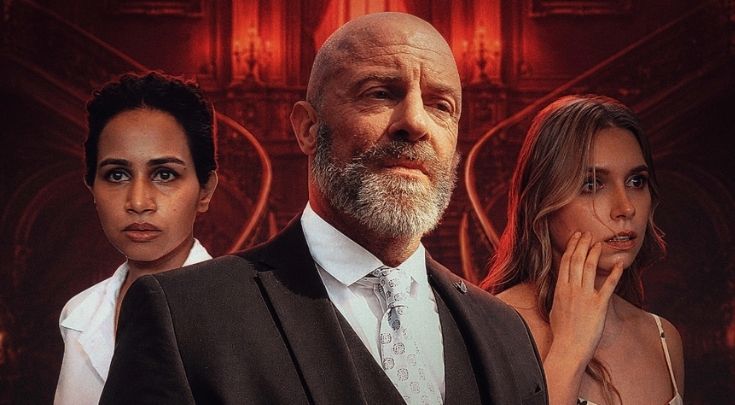
The official poster for "Inheritance Games," the English-language vertical drama written and directed by Ed Robinson. | Source: Ed Robinson
Robinson's directing style may emphasize efficiency, but his writing process is far less structured.
He describes himself as a "pantser," a writer who begins with an idea and discovers the story while writing rather than planning every beat in advance.
Advertisement
"When I have an idea for something, I just start writing it and see what comes, and it develops linearly," he explained. "I very rarely rewrite anything, Inheritance Games was shot off a first draft."
Most projects begin with a central premise. From there, Robinson follows what he calls his 30-page rule.
"I will keep writing something until I get to page 30," he said. "If I know what comes next and I can see what's going to play out, I keep going. If not, it goes in the drawer and maybe it comes out at a later time when the idea is there, or maybe that one just isn't going to work."
When developing characters, Robinson often imagines specific performers delivering the lines. Even when the actor is someone he may never work with, hearing a distinct voice helps make the character feel more complete.
For "Inheritance Games," he was able to take that approach further by writing for actors he already knew personally, including Kokila Mohini Beri and Lisa-Marie Spiegel, who play siblings Donna and Sophie.
"Tarick, who plays Jason, is someone I've known for over a decade and worked with on literally dozens of things, so for better or worse, his voice is permanently in my head," Robinson said.
Advertisement
He also challenges himself to move beyond the most predictable version of any character.
"When developing a character I always ask myself, 'but what if they were…,'" he explained.
A loan shark, for example, does not automatically have to be the familiar middle-aged man audiences have seen repeatedly. Robinson might instead imagine an elderly woman, a much younger man who communicates through a computer, or someone from a background rarely associated with the role.
"There are so many stock characters that we've seen play out again and again, I like that idea of recasting them in the most interesting way possible," he said. "Not for a novelty, that's the wrong approach, but to make them a more interesting character."

The cast and crew of "Inheritance Games." Robinson wrote several of the series' lead roles with specific actors in mind. | Source: Ed Robinson
Robinson has previously compared vertical dramas to the B-movies of the 1950s and 1960s, and directing within the format has only strengthened that connection for him.
Unlike prestige films expected to carry major budgets and awards ambitions, B-movies could embrace unusual premises and prioritize entertainment.
"What I love about B movies is they had so little restriction," he said. "A movies had to be sincere, they had to be Oscar worthy, they had to have high production values. B movies could just be fun, just a wild new story."
Advertisement
For Robinson, vertical dramas now offer audiences a similar alternative to emotionally demanding prestige television.
"Sometimes watching Mare of Easttown and The Wire is just too draining mentally and you need something fun, light, and exciting," he said. "That's where verticals come in. You strip away the budget, the big show, and it's a really concentrated, story-driven, likeable watch."
His filmmaking influences reflect that same appreciation for resourcefulness.
"For me it's John Waters, Roger Corman, Ed Wood, the ones who got a movie made out of nothing," Robinson explained. "And the vertical industry has been a lot like that, scrappy and industrious and just getting it made."
He also named Kansas Bowling as a contemporary filmmaker whose bold approach he admires and believes could eventually make her an icon.
For Robinson, the essential quality of any successful vertical drama is simple: watchability.
"A good vertical, that's what you're watching, that's where your eyes and ears are, you're locked in," he said.
As the medium grows, however, he believes originality will become increasingly important. Familiar storylines helped establish the genre, but audiences may eventually tire of seeing the same romantic and billionaire-centered premises repeated.
Advertisement
"There's only so many times we can watch an ingenue get sold to a billionaire before that story isn't holding eyes any longer," he said.

Behind the scenes of "Inheritance Games." Robinson believes vertical dramas succeed by focusing on strong storytelling rather than spectacle. | Source: Ed Robinson
Robinson's vision for vertical drama is not limited to keeping viewers entertained. He also believes creators must think more carefully about how stories affect their audiences, particularly younger women.
"Also digital health will be important in the future for verticals," he said. "There are some unhealthy things being propagated I don't like to see, much of it directed at young women."
While provocative content may attract attention, Robinson argued that writers and directors should remain conscious of what their work normalizes or glamorizes.
"No vertical I make will ever feature sexual abuse, loss of autonomy, mental manipulation and gaslighting, or misogyny as anything other than what it is — an evil," he said. "It's not romantic to 'possess' someone."
Advertisement
At the same time, he expects vertical dramas to gain greater recognition as a legitimate storytelling medium.
He compared the skepticism surrounding the format to earlier moments when established art forms dismissed new ones, from opera looking down on ballet to film actors dismissing television and traditional networks questioning streaming.
"Can we see a pattern?" Robinson asked. "Well, wait and see guys cause if history taught us anything, I think you'll change your tune on that fairly soon. Legitimacy, or more fairly greater legitimacy, is coming."

Ed Robinson believes vertical dramas are still in their early stages and expects the format to gain greater recognition as the industry continues to evolve. | Source: Ed Robinson
Vertical productions have also allowed emerging actors, writers, and directors to gain experience without always facing the same barriers found in traditional union productions. Robinson emphasized that he supports unions but acknowledged that eligibility requirements can make it difficult for newcomers to establish themselves.
However, accessibility should never become an excuse for poor working conditions.
"I would hate to see verticals becoming shorthand for exploitation," he said. "I don't want to be hearing stories of casts and crews pushed past 14 hour days, draining themselves for the work. I hope we as an industry will find that balance between accessibility and workplace integrity."
Advertisement
As for what opportunities remain unexplored, Robinson believes the possibilities are almost limitless.
"In terms of what's untapped — everything," Robinson said. "This industry has only just begun and has so far to go."
Robinson is already preparing to return to a vertical drama set.
His next series, scheduled to begin filming in Mumbai on July 20, is a hospital-set drama starring Spiegel alongside Mark Bennington, Beri, Brian Carson, Tejas Krishnan, Arnold Chon, and Zachary Coffin.
After making "Inheritance Games," which Robinson describes as the first English-language vertical filmed in India, he hopes more producers will recognize what Mumbai can offer international productions.
"There are so many studios, so many amazing locations, you really might not think about it from the outside but Mumbai has built up such a massive infrastructure for their film industry that you really can shoot in Mumbai and make it look like anywhere in the world, and for such affordable rates," he said. "I know I sound like an ad now haha, but I do think I could tempt some productions over here…"
Beyond vertical dramas, Robinson will appear in what he called one of his biggest on-camera roles in Amazon Prime Video's upcoming series "The Revolutionaries," expected to premiere in August.
Advertisement

The upcoming Amazon Prime series "The Revolutionaries" is one of Ed Robinson's next on-screen projects. | Source: Ed Robinson
He also plans to attend the Vertical Micro Drama Market in Las Vegas, where "Inheritance Games" was selected for the Vertical Shorts Festival.
Looking further ahead, Robinson would like to direct an ongoing vertical series rather than another self-contained feature-length production.
"I'd like to do something serialised that runs long term while still keeping the vertical 1-2 min format," he explained. "I think if it could land with an audience, an ongoing vertical could keep a fanbase engaged for — literally — years."
He is also interested in making greater use of India's landscapes. His existing vertical projects have been geographically ambiguous, but he hopes to eventually direct an adventure series that draws on the country's jungles, ruins, caves, and mountains.
"If any reader would like to finance a large scale adventure series, I won't hang up the phone," he joked.
Advertisement
Although filmmaking occupies much of Robinson's professional life, it is not what he considers the center of his personal world.
Outside work, he dedicates several hours each day to street outreach in Mumbai, helping provide food, clothing, education, and first aid to homeless and street-involved children.
Over the years, Robinson has formed relationships with around 200 children and their families, many of whom have become one of his closest communities. For Robinson, the distinction between work and life is clear:
"It's important to remember what is work and what is life. Filmmaking for me is work, and being around those kids and their families is life."
That work has also found subtle expression in his storytelling. The three household staff members competing in "Inheritance Games," Keerthi, Arun, and Sapna, were named after children Robinson knows through outreach.
"Getting out of my head, my own worries or neuroses and refocusing on doing something for people outside of myself has been one of the best ways to stay mentally grounded and in its own way inspired," he said.
Advertisement
When he does turn to books for creative guidance, Robinson prefers practical accounts from people who understand the realities of making a career in entertainment.
He recommends Roger Corman's "How I Made 100 Movies in Hollywood and Never Lost a Dime," Robert Rodriguez's "Rebel Without a Crew," and Thomas Lennon and Robert Ben Garant's "Writing Movies for Fun and Profit" for filmmakers.
For actors, his choices include Jenna Fischer's "The Actor's Life: A Survival Guide," Eric Roberts' "Runaway Train," and David Niven's "The Moon's a Balloon."
"These are books that really do give instructions, insights, genuine stories, as opposed to romanticised memories of established directors," Robinson said of his filmmaking recommendations.
Ultimately, he hopes his future work remains rooted in the sense of accessibility and community he currently sees within vertical drama.
"No one in the vertical industry yet feels unapproachable or elitist and if we can keep that communal demesne, we'll all benefit," he said.
Advertisement
Robinson invited actors seeking opportunities, new directors looking for advice, and producers hoping to develop projects to contact him rather than remain outside another closed creative circle.
"I spent so many years knocking on proverbial doors in the film industry that were welded shut and in the end, nobody benefits from that," he said.
"So I would say I hope that the future of my work is vast, and involves a good many of you."
After making his mark on Australia's "Home and Away," Nic Westaway found an unexpected new chapter in Vancouver's vertical drama industry. Now, he's expanding his career beyond acting into writing and directing.
Jul 09, 2026
During an on-stage conversation with Kerttu Karon at the LA Vertical Drama Market: 2nd Edition, Eric Guilmette opened up about everything from poetry and publishing to producing, entrepreneurship, and the personal experiences that shaped his creative journey.
May 16, 2026
What do you get when a classically trained stage actor jumps into fast-paced, phone-sized dramas? For Teig Sadhana, the answer is a breakout career. Teig Sadhana is from Australia, who trained at the Stella Adler Studio of Acting in New York.
Mar 20, 2026
Yevhenii Lisnychyi has built a career both behind the microphone and in front of the camera, bringing characters to life through voice acting and vertical dramas alike. Here's a closer look at the Ukrainian actor's path and the roles that continue to shape his career.
Jun 26, 2026
From Shakespeare stages in New York to billionaire romances and mafia dramas on mobile screens, Gabe Armentano’s acting career has taken an unexpected path. Along the way, the Connecticut-raised actor has become one of vertical drama’s busiest leading men.
May 25, 2026

For Matteo Corsaro, acting wasn’t always the plan. But once he committed to it, things moved quickly. In an exclusive interview with Vertical Drama Explorer, he reflects on his journey into vertical dramas and shares behind-the-scenes photos from productions he filmed across multiple countries.
May 08, 2026
Every acting career begins with a dream, and for Jameson Leigh Muntz, that dream started in childhood. Today, she's building a growing body of work in vertical dramas while staying true to the passion for storytelling that first inspired her.
Jul 06, 2026
Known for playing fearless queens, determined heroines, and powerful women, Emma Reinagel has found her niche in vertical dramas. What began as another acting opportunity ultimately became the career breakthrough she didn't see coming.
Jun 26, 2026
Candace Mizga's love of storytelling began long before she stepped onto a film set. Today, she's helping shape the future of vertical dramas—not only as an actress, but also as a writer, producer, and creative force behind the stories she believes deserve to be told.
Jul 05, 2026
Gabe Armentano has played CEOs, billionaires, politicians, and romantic leads. But when asked to define himself, the vertical drama actor began with something much simpler.
Jul 06, 2026
Eric Guilmette says vertical drama has come a long way from where it started. During a conversation at the LA Vertical Drama Market, the actor and producer spoke about the industry’s changes and the kind of stories he hopes to see more of in the future.
May 13, 2026

Bogdan Ruban's path to vertical dramas didn't begin on a film set. From competitive ballroom dancing to theater and television, his career has been shaped by a lifelong passion for performance.
Jun 24, 2026
"The Double Life of My Billionaire Husband" captured attention and rewrote the rules for Western vertical dramas. Combining high-stakes romance and two breakout performances from Avery Lynch and Jarred Harper, the series has quickly become a cultural touchstone for mobile-first storytelling.
Mar 22, 2026
Julie Bruns didn't want to spend her career waiting for the next opportunity. Instead, she set out to create the stories she wanted to tell, building a career that now spans acting, writing, producing, and directing.
Jul 07, 2026